Most Vizsla puppies need four meals a day until around three months, three meals until six months, and then two meals a day for life. Feed a complete puppy food, weighed out using the packet guide, and adjust it to how your puppy looks and feels. The exact number on the scoop matters far less than keeping them lean while they grow.
This article is based on research and personal experience as a Vizsla owner. I’m not a qualified dog trainer, Vet or dog behaviourist.
Vizslas are lean, leggy and always look like they haven’t been fed in a week, which makes overfeeding one of the easiest mistakes to make with this breed. A Vizsla is supposed to look like that.
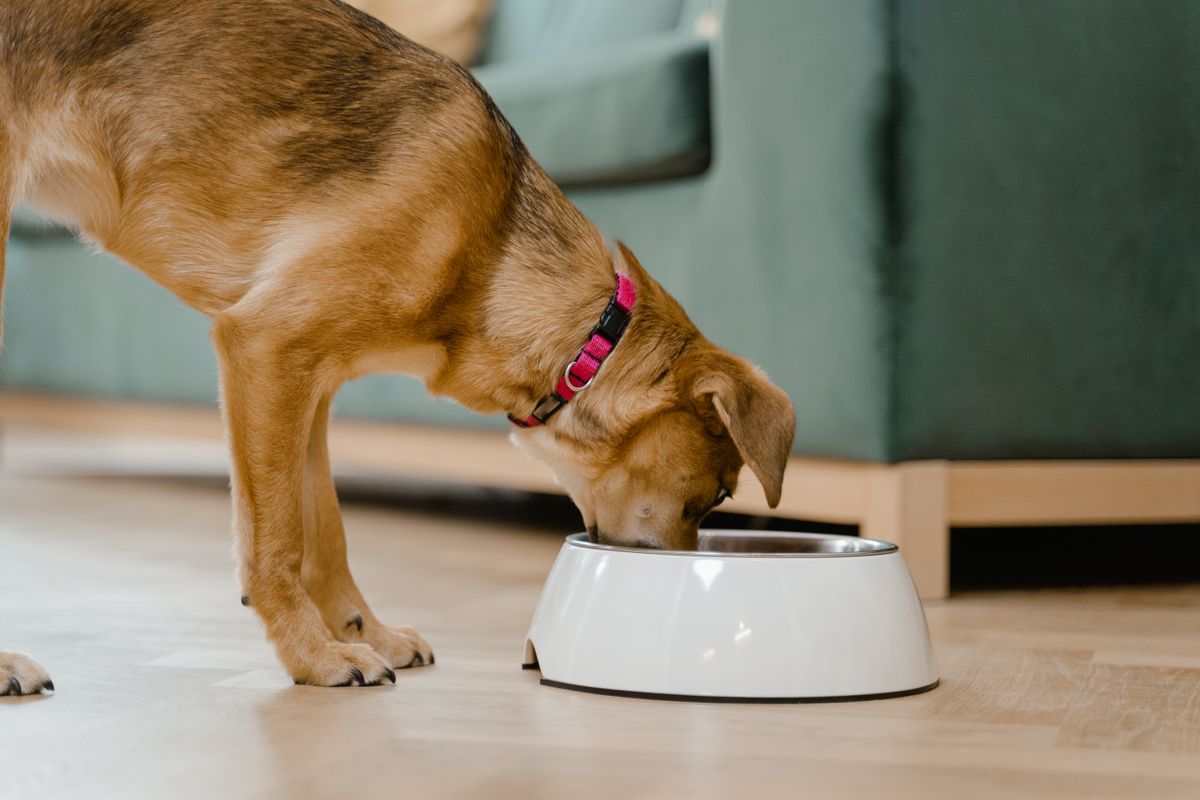
What Do You Need To Know About Vizsla Puppy Feeding At A Glance?
| Meals at 8 weeks to 3 months | 4 a day |
| Meals at 3 to 6 months | 3 a day |
| Meals from 6 months | 2 a day, morning and evening |
| Food type | Complete food labelled for puppies |
| Portion guide | The packet, adjusted to body condition |
| Large breed puppy food? | Usually no (see below) |
| Switch to adult food | Around 12 months for most Vizslas |
| Treats | No more than 10% of daily calories |
| Fresh water | Down at all times |
How Many Meals A Day Does A Vizsla Puppy Need?
Four to start with, dropping to three at around three months and two from about six months. The UK welfare charities and the breed club all land in roughly the same place, they just draw the lines at slightly different weeks.
| Source | 8-12 weeks | 3-4 months | 4-6 months | 6 months+ |
|---|---|---|---|---|
| Blue Cross | 4 meals | 4 meals | 3 meals | 2 meals |
| Dogs Trust | 4 meals | 3 meals | 3 meals | 2 meals |
| Royal Kennel Club | 4 meals | 4 meals | 2-3 meals | 2 meals |
| Hungarian Vizsla Club | 4 meals | 3 meals | 3 meals | 2 meals |
I’d listen to the breed club most closely here. The Hungarian Vizsla Club’s puppy pack suggests moving to three meals at about three months and two meals at about six months, which is a little earlier than Blue Cross, and it’s what most Vizsla owners I know actually do.
Don’t stress about the exact week. If your puppy starts leaving food at one of the meals, that’s your cue to drop a meal, not the calendar.
Two meals is where you end up, not a stepping stone to one. Blue Cross recommends a morning and evening meal for your dog’s whole life, and Dogs Trust agrees that adult dogs should normally be fed twice a day.
What Does A Vizsla Puppy’s Daily Feeding Schedule Look Like?
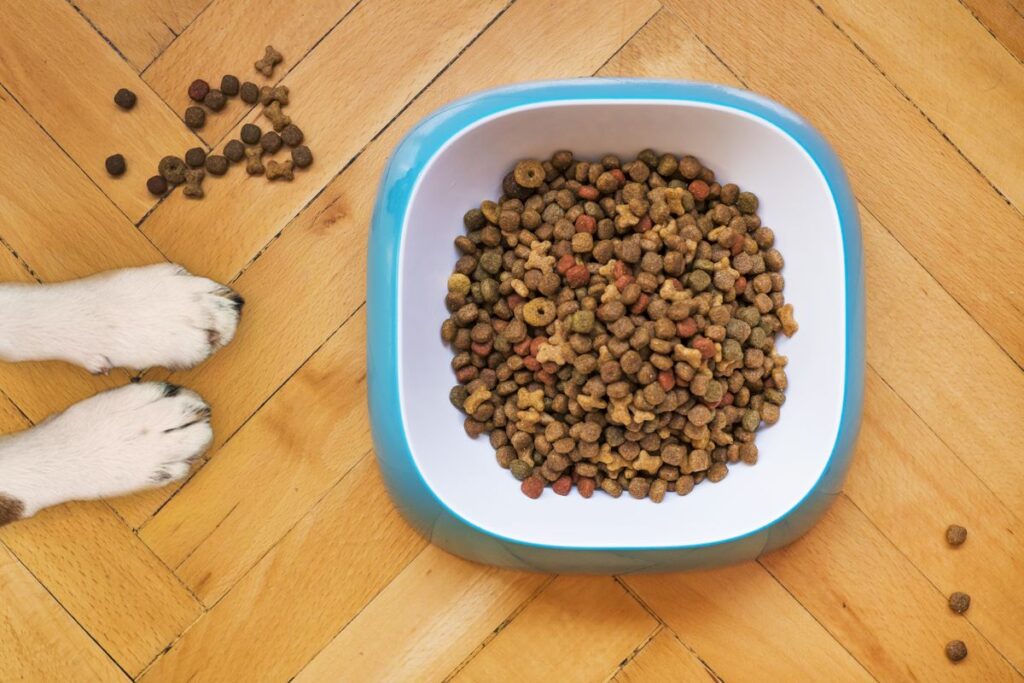
Fixed times, spaced evenly across the day, with the last meal early enough that everything has come out again before bed. Here’s a schedule that works well for an 8 to 12 week old:
| Time | What happens |
|---|---|
| 7am | Toilet, then breakfast |
| 7.15am | Straight back out to the garden |
| 11am | Meal two, then out again |
| 3pm | Meal three, then out again |
| 6.30pm | Meal four, then out again |
| 7.30pm | Last drink, water bowl lifted for the night |
The timing of that last meal really does matter. The Royal Kennel Club says puppies normally wee within fifteen minutes of eating and poo within half an hour, so a fixed feeding routine is what gives you a fixed toilet routine. That’s why our Vizsla puppy potty training guide leans on it so heavily. A 9pm dinner usually means a 9.30pm accident.
Our free Vizsla puppy planner has a sheet you can write the times on and stick to the fridge. That helps more than you’d think when four people in the house are all being told the dog hasn’t been fed.
How Much Should You Feed A Vizsla Puppy?
Start with the guide on the packet, weigh it rather than scooping it, and then adjust to what you can feel through your puppy’s coat. The PDSA recommends feeding weighed-out portions based on the packet’s guide for your puppy’s weight, and Dogs Trust points out that those figures are only guidelines you may need to tweak for your own dog.
Two Vizsla puppies of the same weight can need quite different amounts, because one of them never stops moving. Use body condition to adjust:
- You should be able to feel the ribs easily under a thin covering, without pressing hard.
- Looking down from above, there should be an obvious waist behind the ribcage.
- From the side, the tummy should tuck up rather than run parallel to the floor.
In a Vizsla, a faint outline of the last rib or two when they turn is normal and correct. People will tell you your dog is too thin. They’re usually picturing a Labrador.
Should You Keep Feeding The Food Your Breeder Used?
Yes, for the first couple of weeks at least. The Hungarian Vizsla Club is very clear that you shouldn’t change your puppy’s diet when they first come home. A puppy that has just left its mum, its littermates and everything it knows doesn’t need a new bag of food on top.
When you do want to change, and there are plenty of good reasons to, from cost to a fussy eater, do it slowly. Blue Cross suggests spreading the change over a week to 10 days to avoid an upset tummy, mixing in a little more of the new food each day. Our guide to the best dog food for Vizslas goes through what to look for on the label.
Whatever you choose, it needs to say complete on the packet and be labelled for puppies or for growth. Toppers, complementary foods and most home-cooked meals aren’t balanced on their own.
Does A Vizsla Puppy Need Large Breed Puppy Food?
Usually not, and this is the feeding mistake I see most often with the breed. The Royal Kennel Club recommends a large breed growth diet for puppies expected to weigh 30kg or more as adults.
The Hungarian Vizsla Club puts adult females at roughly 20-25kg and males at roughly 25-30kg. So females sit comfortably below that line, and most males do too, which means a standard complete puppy food is right for the majority of Vizslas.
Why it matters: large breed puppy foods have lower energy density and carefully controlled calcium, because the balance of calcium and phosphorus is especially important for big, fast-growing dogs. Feeding one to a dog that doesn’t need it isn’t a disaster, but it should be a decision you make on purpose, not one you make because your puppy has long legs.
If you’ve got a big male heading for the top of the breed range, ask your vet. That’s a genuine judgement call, and your vet can weigh him.
When Should A Vizsla Switch From Puppy Food To Adult Food?
Around twelve months for most Vizslas. The Royal Kennel Club sets it by adult weight: dogs between 11kg and 25kg reach adulthood at a year old, while dogs over 26kg can take anywhere from 15 months to two years.
That puts the Vizsla right on the line, which is why you’ll see both answers online.
| Your dog’s likely adult weight | When to switch |
|---|---|
| Under 25kg (most females) | Around 12 months |
| Over 26kg (bigger males) | 15 months or later, ask your vet |
Blue Cross suggests puppy food until around a year old, or as your vet advises. Make the change over 7 to 10 days, the same way you’d change any food.
And remember a Vizsla is physically grown long before it’s mentally grown. The food changes at a year, but the puppy behaviour carries on for a good while yet, as our puppy training guide explains.
Can You Overfeed A Vizsla Puppy?
Easily, and it’s worth taking seriously. The evidence that lean growth pays off long-term is stronger than for almost anything else you’ll do this year.
In a 14-year study of 48 Labradors, dogs fed 25% less than their littermates from eight weeks old lived to a median of 13 years, against 11.2 years for the dogs fed freely (Kealy et al., 2002). They also developed far less hip arthritis. At two years old, one of 24 restricted dogs showed hip osteoarthritis on X-ray, compared with six of 24 in the other group.
Those were Labradors, not Vizslas, and the restricted dogs were kept lean rather than starved. But the message is hard to argue with. The Royal Kennel Club also lists overfeeding and excess weight gain in large dogs as a risk factor for joint problems like hip dysplasia.
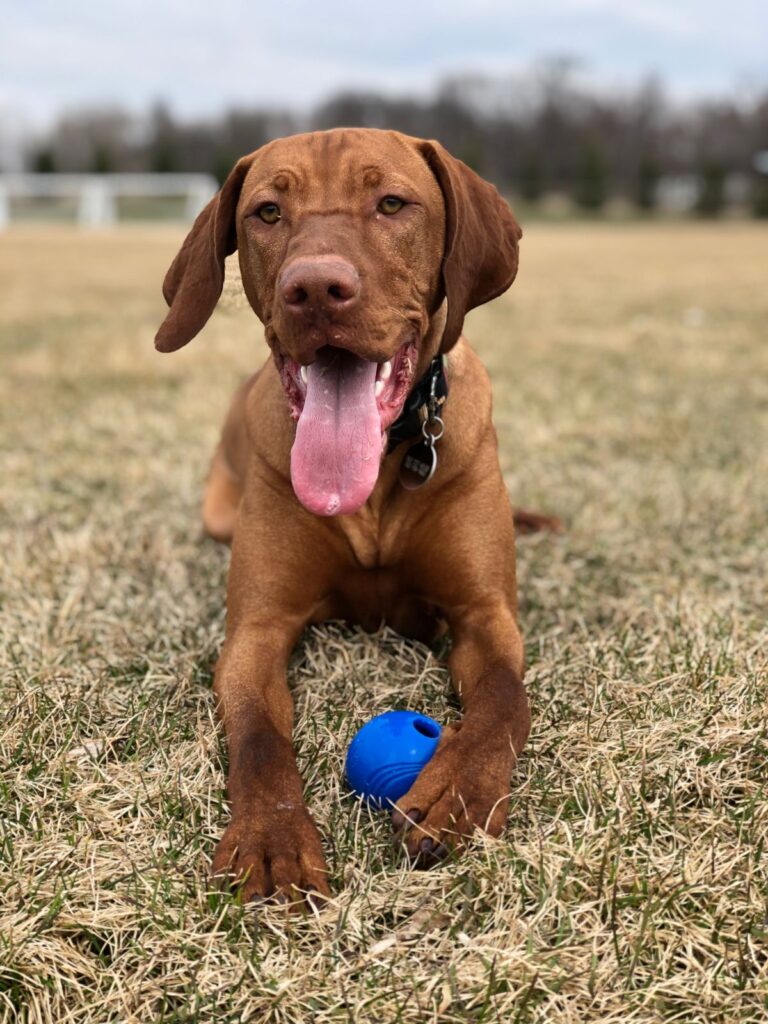
Growing a puppy fast isn’t the same as growing one well. A Vizsla that reaches adulthood a bit later and a bit leaner is the one you want.
How Do Treats Fit Into A Vizsla Puppy’s Daily Food?
They come out of the daily allowance, not on top of it, and they should make up no more than 10%. The Royal Kennel Club, Dogs Trust and the PDSA all use that same 10% figure.
With a breed this trainable, 10% goes very quickly. A Vizsla puppy in a busy training week can get through a startling number of treats, so:
- Chop everything small. Dogs Trust suggests pea-sized pieces for training, and a Vizsla cares far more about the timing of the reward than the size of it.
- Use part of their actual meal as training food for the first few months. Weigh out breakfast, put half of it in a treat pouch, and let them earn it.
- Keep an eye on what everyone else is handing over. Our homemade dog treat recipes are handy here because you know exactly what’s in them.
Should You Feed A Vizsla Before Or After A Walk?
Neither, if you can help it. Leave a gap either side. The Royal Kennel Club warns against feeding a dog immediately before or after exercise because of the risk of bloat, a life-threatening emergency, and the Hungarian Vizsla Club gives the same warning about big feeds of dry food before exercise.
Bloat is rare in puppies, but the habit you build now is the one you’ll still have when your dog is a deep-chested five-year-old. Feed, leave an hour before anything energetic, and let your dog settle after a run before dinner goes down. That fits a puppy’s exercise needs anyway, since walks should be short at this age.
Next in this series: what’s happening to your puppy at each stage as they grow, and when they finally stop. See our Vizsla puppy growth chart.
Vizsla Puppy Feeding FAQs
How many times a day should I feed my Vizsla puppy?
Four meals a day from eight weeks, three from around three months, and two from about six months onwards. That’s in line with the Hungarian Vizsla Club’s own puppy advice. Stay at two meals a day for the rest of their life.
How much food does a Vizsla puppy need?
Start with the weighed amount on the packet for your puppy’s weight, then adjust up or down based on body condition. The PDSA recommends weighed-out portions, and Dogs Trust points out the packet figures are only a guideline. You should be able to feel your puppy’s ribs easily and see a waist from above.
Does a Vizsla puppy need large breed puppy food?
Usually not. The Royal Kennel Club recommends large breed puppy food for dogs expected to reach 30kg or more, and most adult Vizslas weigh around 22-30kg, with females at the lighter end. A standard complete puppy food is right for most. If your dog is heading for the top of the breed range, ask your vet.
When should a Vizsla puppy switch to adult food?
Around twelve months for most. The Royal Kennel Club says dogs between 11kg and 25kg reach adulthood at one year, while dogs over 26kg mature between 15 months and two years. Make the change gradually over 7 to 10 days.
Why does my Vizsla puppy always act starving?
Because they’re a high-energy working breed with very little body fat, and because Vizslas are extremely good at asking. Trust the scales and your hands, not those eyes. If your puppy is losing condition, eating well but staying thin, or has any change in their toileting, that’s a vet visit rather than an extra scoop.
Before You Go
Feeding a Vizsla puppy is much simpler than the internet makes it look. Pick a complete puppy food, weigh it, split it across four meals and work down to two, keep treats under 10%, and check their ribs with your hands once a week rather than checking the bag.
The hardest part is holding your nerve when someone tells you your athletic, correctly lean puppy looks underfed. They don’t. They look like a Vizsla.
Everything else about those first weeks is in our guide to bringing home a Vizsla puppy, plus another 28 tips for new Vizsla puppy owners for when you’ve got a spare five minutes (which you won’t, for a while).
What’s your puppy eating, and did you stick with the breeder’s food? Let me know in the comments.
More Vizsla Food Guides
Liked this post? Follow us on Facebook, Twitter or Pinterest to see more guides like this one in your feed.